
“Perceptual objects in the unimodal and multimodal settings“
The project has been funded by the National Science Centre, Poland (Grant 2019/35/B/HS1/04386).
Host Institution: University of Warsaw, Faculty of Philosophy
Project Description: https://projekty.ncn.gov.pl/opisy/461209-en.pdf
For a long time, the philosophy of perception has ignored questions bringing it into contact with the sciences of the mind and brain. This proposed research project aims to correct that tendency by directly approaching a topic where philosophical theorizing and empirical findings not only have some points of contact, but share a focused interest and clearly need one another for their progress. Based on empirical research on object processing in various sensory modalities, this project aims to develop a comprehensive account of perceptual objecthood by addressing questions of ‘objecthood’ from a sensory specific and multisensory perspective.
There is an intuitive sense in which we can see, hear, and smell some objects (the crackling campfire), whereas other objects of perception (rainbows) seem confined to a single modality. Perceptual objects are the events or entities that we perceive; they are those individuals to which perceptual mental states attribute properties. The most plausible candidates for perceptual objects presented through vision include ordinary, persistent material objects and/or spatiotemporal regions; those presented through audition include sounds and/or ordinary objects; and those presented through olfaction include odors and/or ordinary objects. Although the topic of perceived objects and properties is of great importance for philosophy and psychology, many issues remain puzzling. For instance: While listening to piano music, do we hear the instrument or its sounds? Or do we experience one by experiencing the other? This interdisciplinary project aims to explore whether – and if so, how – the issue of the range of properties represented in perceptual experience bears on the nature of perceptual objects. The main hypothesis is that considering the former issue may provide us with a new understanding of perceptual objecthood.
The project seeks to fit in with the recent explosion of interdisciplinary work between philosophy of perception, psychology, and cognitive neuroscience. Philosophical matters will be approached through the lens of empirical evidence in two stages. First, the application of the ‘admissible contents debate’ from the domain of vision will be widened to focus on the properties perceived in non-visual senses. Second, the investigation of the question of what exactly it is that is perceived will be extended to include more complex perceptual objects at the level of ordinary objects. The results of these analyses will determine whether we should think of sense perception as organized around perceptual properties or consider it rather as dealing with ordinary objects.
The project embraces four main subtasks devoted to analyses of the origin of object perception, the conceptual and methodological aspects underlying the investigation of unisensory and multisensory perceptual objects, the differences and similarities between perceptual objects in various senses, and the multisensory level of perceptual objecthood. The research team will classify the kinds of entities we can perceive through individual sense modalities, how they vary, and how the contributions made by different modalities are related to one another. The team will explore the concept of “object”, the structure, and characteristics of perceptual objects in various sensory modalities as well as the degree to which multiple sensory modalities can work together to construct a single, unified perceptual object. The project implements a novel approach of scrutinizing to what extent findings on visual perceptual objects can be useful for elucidating our knowledge about perceptual objects in other sense modalities. It goes beyond the traditional investigation of the visual and auditory senses to cover the whole field of research by integrating work on vision, audition, olfaction, taste, and touch. Another innovative aspect studied here will be how to understand the relation between multimodal and unimodal perceptual objects.
Recent scientific findings demonstrate that the brain is organized in a meta-modal way, realizing its tasks in a modality-independent manner, yet at the levels of sensory stimuli, perceived properties, brain activations, and generated perceptual experiences many processes can still be described in a modality-specific way. Thus, it is timely and ground-breaking to characterize modality-specific and multisensory processes. Philosophy of perception has just started to recognize the complexity of philosophical issues arising from the multimodality of perception. But we are still lacking theories explaining, for instance, how unimodal perceptual objects are combined with one another into the unified multimodal perceptual objects. These conceptual and at the same time empirically informed philosophical investigations proposed in this project will contribute to progress within the interdisciplinary field of sensory research. They will move forward the topic which is crucial for perception science and philosophy, the topic which deals with the foundations of perception, which should be a point of departure, but has remained under-researched to a large degree. In addition, advancing our knowledge of perceptual objects will stimulate rethinking various issues in the philosophy of perception, e.g., the individuation of the senses, sensory integration, and relations between objects of sense perception and those of mental imagery.
Research Group: PI & Group Leader (A. Mroczko-Wąsowicz), 2 Postdocs (A. Anaya, S. Ivy), and 4 Students (P. Zguda, N. Stoch, M. Bachanek, A. Cząstkiewicz)
Project Duration: Oct 2020 – Oct 2026
Research Outcomes:
PUBLICATIONS
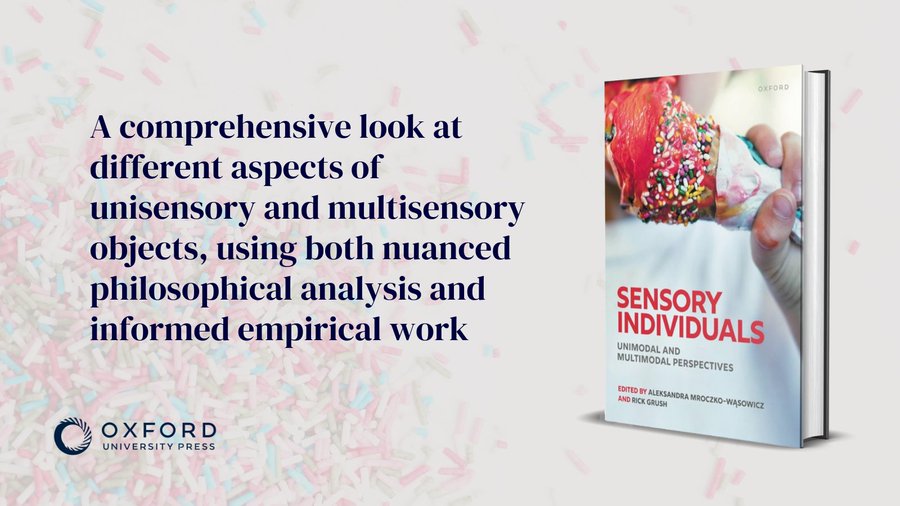
Mroczko-Wąsowicz, A. & Grush, R. (Eds.). (2023). Sensory Individuals: Unimodal and Multimodal Perspectives. Oxford: Oxford University Press. ISBN: 9780198866305
Ivy, S., Mroczko-Wąsowicz, A. (2025). Three grades of subject-dependency in object perception. Synthese 206, 96. https://doi.org/10.1007/s11229-025-05182-5 [PDF]
Ivy, S., Mroczko-Wąsowicz, A. (2025). Framing Effects in Object Perception. Review of Philosophy and Psychology. https://doi.org/10.1007/s13164-024-00763-8.
Mroczko-Wąsowicz, A. (forthcoming). Why is synesthetic perception interesting for philosophers? In MJ de Córdoba & D. Riccò (Eds.) (2025). The Proceedings of the VIII International Congress “Synesthesia: Science and Art”. Special Edition / Twenty-Year 2005-2025.
Ivy, S., Mroczko-Wąsowicz, A. (2025). Do perceivers contribute to object perception? In Proceedings of the Annual Conference of the Cognitive Science Society, 47
Mroczko-Wąsowicz, A. (forthcoming). The Binding Problem. In Asifa Majid and Michael C. Frank (Eds.) The MIT Open Encyclopaedia of Cognitive Science.
Mroczko-Wąsowicz, A., Ivy, S., Bachanek, M., & Cząstkiewicz, A. (2024). Accounting for Action: Challenging the Traditional View of Multimodal Perceptual Objects. In L. K. Samuelson, S. L. Frank, M. Toneva, A. Mackey, & E. Hazeltine (Eds.), Proceedings of the Annual Conference of the Cognitive Science Society, 46.
Mroczko-Wąsowicz, A. & Grush, R. (2023). Sensory Individuals: Contemporary Perspectives on Modality-specific and Multimodal Objecthood. In: A. Mroczko-Wąsowicz and R. Grush (Eds.) Sensory Individuals: Unimodal and Multimodal Perspectives (pp. 1–18). Oxford: Oxford University Press.
Mroczko-Wąsowicz, A., O’Callaghan, C., Cohen, J., Scholl, B., Kellman, P. (2023). Advances in the Study of Visual and Multisensory Objects. In M. Goldwater, F. K. Anggoro, B. K. Hayes, & D. C. Ong (Eds.), Proceedings of the Annual Conference of the Cognitive Science Society, 45.
Mroczko-Wąsowicz, A. (2023). Perceptual expertise and object recognition: An explanatory task for modularists and antimodularists. Philosophy and the Mind Sciences, 4, 14. https://doi.org/10.33735/phimisci.2023.10247
Mroczko-Wąsowicz, A., Stoch, N., Zguda, P. (2023). What makes something a perceptual object? In: A. Mroczko-Wąsowicz and R. Grush (Eds.) Sensory Individuals: Unimodal and Multimodal Perspectives (pp. 37–54). Oxford: Oxford University Press.
Mroczko-Wąsowicz, A. (2022). Modularity. In B. D. Young & C. Dicey Jennings (Eds.). Mind, Cognition, and Neuroscience: A Philosophical Introduction (pp. 149-163). New York: Routledge Press. ISBN 9781138392366
CONFERENCE PRESENTATIONS
VIII International Congress “Synaesthesia: Science and Art”, Alcalà la Real, Jaén, Spain, October 23-25, 2025; Why is synesthetic perception interesting for philosophers? (keynote speech).
The 21st Conference of the Italian Association of Cognitive Sciences (AISC), the IMT School for Advanced Studies Lucca, Italy, September 17-19, 2025; Grades of subject-dependency in object perception (talk).
Consciousness Research Network (CoRN) 2025, Chulalongkorn University, Faculty of Medicine, Bangkok, Thailand, August 6-8, 2025; Do perceivers contribute to object perception? Exploring grades of subject-dependency (talk).
The 47th Annual Meeting of the Cognitive Science Society (CogSci25), San Francisco, CA, USA, Jul 30-Aug 2, 2025; Do perceivers contribute to object perception? (full paper presentation).
The 5 th International Conference on Philosophy of Mind: Natural and Artificial Intelligence, Porto, Portugal, May 15-21, 2025; How does the mind shape object perception? A taxonomy of subject-dependency (talk).
AHRC-DFG SENSOR project conference “Sensory Engineering: Philosophical Perspectives”, Erlangen, Germany, April 22–24, 2025; Perceptual objects in natural and virtual environments (invited talk).
Symposium at the 2025 American Philosophical Association Central Division meeting, February 20-27, 2025; The effects of framing on object perception (talk).
The 20th Annual Conference of the Italian Association for Cognitive Sciences, Rome, Italy, September 18-20, 2024; Action in multimodal object perception (talk).
The 46th Annual Meeting of the Cognitive Science Society (CogSci24), Rotterdam, Netherlands, July 24-27, 2024; Accounting for Action: Challenging the Traditional View of Multimodal Perceptual Objects (full paper presentation).
The European Society for Philosophy and Psychology, University of Grenoble-Alpes, France, July 2-5, 2024; Action’s integral role in multimodal object perception (talk).
The Epistemic Significance of Perceptual Consciousness Conference, Jagiellonian University, Kraków, May 30-31, 2024; The effects of framing on perceptual object individuation (talk).
Centre for Philosophical Psychology and European Network for Sensory Research, University of Antwerp, Belgium, May 21, 2024; Accounting for Action: Challenging the Traditional View of Multimodal Perceptual Objects (invited talk).
The 11th European Congress for Analytic Philosophy (ECAP23), Vienna, Austria, August 21-25, 2023; Perceptual objecthood: modality-specific and multimodal perspectives (talk).
The 45th Annual Meeting of the Cognitive Science Society (CogSci23), Sydney, Australia, July 26-29, 2023; Advances in the Study of Visual and Multisensory Objects (SYMPOSIUM).
The Society for Philosophy and Psychology (SPP23), Pittsburgh, US, June 21-23, 2023; The Objects of Sense Perception.
The Science of Consciousness (TSC23), Taormina, Sicily, Italy, May 22-28, 2023; Perceptual experience and its objects (talk).
The 44th Annual Conference of the Cognitive Science Society (CogSci22), Toronto, Canada, July 27-30 2022; How to Explain the Automaticity of Object Recognition (talk).
The Society for Philosophy and Psychology and European Society for Philosophy and Psychology (ESPP/SPP 2022), Milan, Italy, July 19-22, 2022; The Automaticity of Object Recognition.
The Society for Philosophy and Psychology and European Society for Philosophy and Psychology (ESPP/SPP 2022), Milan, Italy, July 19-22, 2022; What makes something a perceptual object?
Seminar of the Department of Epistemology, Faculty of Philosophy, University of Warsaw, April 26, 2022; What are perceptual objects? (invited).
The 28th Conference of the European Society for Philosophy and Psychology, Aug 30 – Sep 2, 2021; Sensory Individuals – Multimodal and Amodal (SYMPOSIUM).
Central European University, Summer Program “Representing the world in the developing mind: From objects to context”, July 12-17, 2021; Conditions for Perceptual Objecthood.
 Aleksandra Mroczko-Wąsowicz